

Montserrat, the Garrotxa and Besalú by motorhome
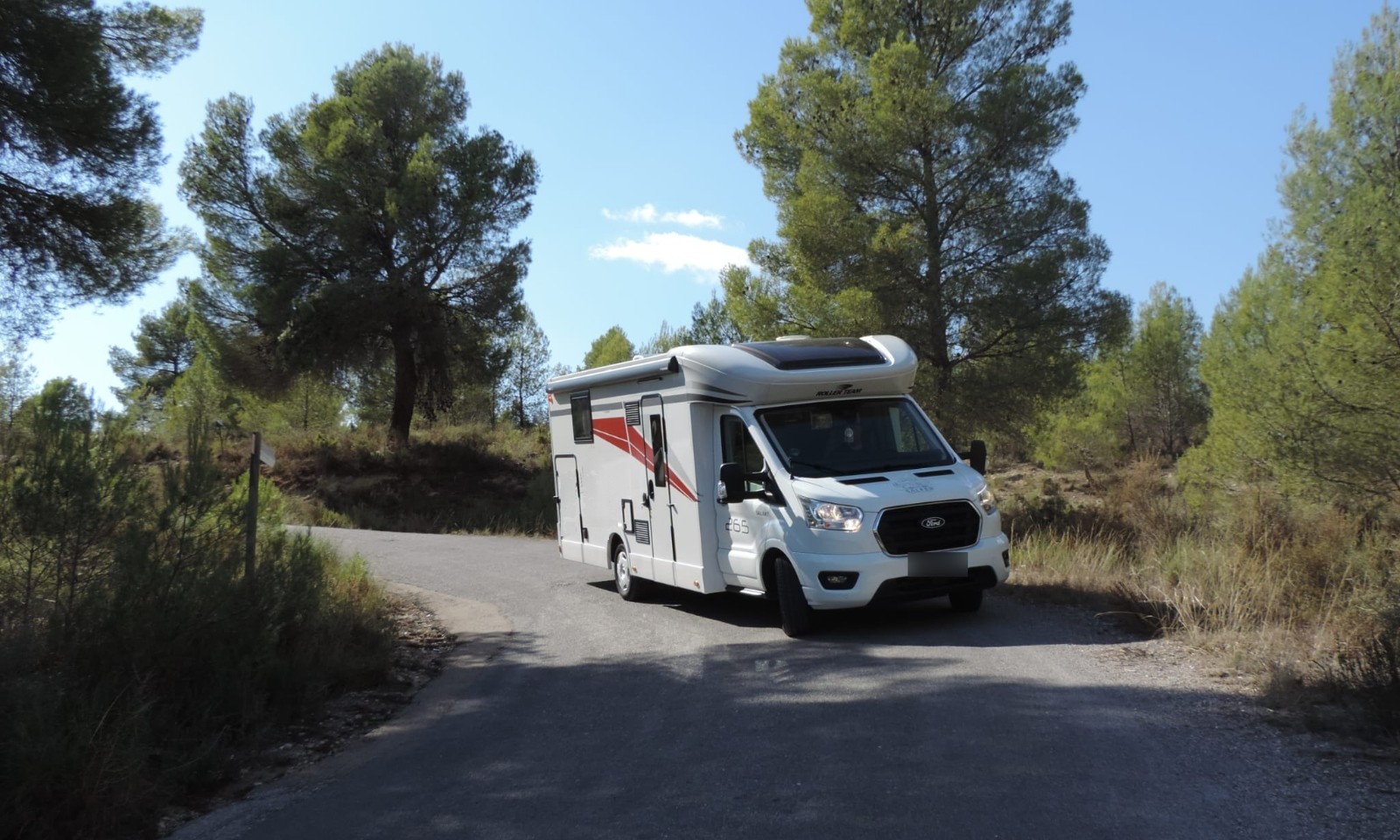
An hour from Barcelona a different Catalonia begins: mountains with impossible shapes, stone villages perched above ravines, volcanoes covered in beech trees and Romanesque monasteries. This inland route links Montserrat, the Osona district, the Garrotxa volcanic area and the Ripollès before ending in the Pyrenees, in the Vall de Núria.
The stages are short, between 15 and 75 kilometres, with a good network of motorhome areas. With seven days you can take it easy; if you have less time, you can cut the end short and head back from Ripoll.
Day-by-day itinerary
Barcelona → Montserrat → Vic → Rupit → Olot and Santa Pau → Besalú → Ripoll → Vall de Núria → Barcelona
Day 1. Barcelona → Montserrat
about 60 km
A short first stage to get used to the motorhome. The road up to the monastery is steep with lots of bends, and the car park at the top fills up at weekends. The easiest option is to leave the motorhome in Monistrol de Montserrat, where there is free parking next to the station, and go up on the rack railway: a ride of about 15 minutes with spectacular views.
At the top, visit the basilica and the Moreneta, and if you still have energy, take the Sant Joan funicular to walk among the rock pinnacles. Spend the night in the Monistrol motorhome area, a few minutes' walk from the village.
Day 2. Montserrat → Vic
about 75 km
Via Manresa you reach Vic, the capital of Osona. Its large Plaça Major is the town's meeting point, and from there the old town is easy to explore on foot, all the way to the cathedral and the Episcopal Museum.
The motorhome area is in the Mas Osona park, just over a kilometre from the centre, with services and a maximum stay of 48 hours.
Day 3. Vic → Rupit → Olot
around 80 km
Rupit is one of the prettiest medieval villages in Catalonia, with stone houses and wooden balconies above a ravine. Vehicles can't enter the village centre: leave the motorhome in the car park at the entrance, which has a few motorhome spaces, and walk across the suspension bridge, which sways a little as you cross.
If you like walking, the Salt de Sallent, a waterfall of more than 100 metres, is about 3 km from the village along a signposted trail. In the afternoon, carry on towards the Garrotxa and find a place to spend the night between Olot and Santa Pau.
Day 4. Garrotxa volcanoes: Fageda d'en Jordà and Santa Pau
about 20 km
Today is for walking in the Garrotxa Volcanic Zone Natural Park, with around 40 extinct volcanoes. The park's route 1 starts from the Can Serra car park, crosses the beech forest of the Fageda d'en Jordà and climbs Santa Margarida volcano, with a chapel in the middle of the crater. From there you can carry on to Croscat volcano.
The park's car parks charge a fee and fill up between 10 am and 5 pm, so arrive early. Afterwards, stroll around Santa Pau, a medieval village that is much quieter than Besalú.
- At Can Serra payment is automatic and by card only.
- You can't climb the Croscat crater: you see it from the trail that goes around it.
- Don't picnic outside the park's designated areas.
Day 5. Olot → Castellfollit de la Roca → Besalú
about 35 km
Before leaving Olot, climb Montsacopa volcano, right in town, to see the whole area from above. Then stop at Castellfollit de la Roca, a village built on the edge of a sheer cliff above the Fluvià river: the best view is from below, from the road.
Finish in Besalú. Cross the Romanesque bridge and wander the cobbled streets to the Plaça Major. The motorhome area is about 700 metres from the centre; tokens for water and electricity are sold at the tourist office.
Day 6. Besalú → Ripoll
about 55 km
Head back towards Olot and follow the N-260 to Ripoll, the cradle of Catalonia. The monastery of Santa Maria was founded in the 9th century by Count Guifré el Pilós, who is buried there. Don't miss its 12th-century Romanesque portal, full of biblical scenes, or the two-storey cloister.
Ripoll has a free motorhome area in the Devesa del Pla park, about 800 metres from the centre, beside the river.
Day 7. Vall de Núria and back to Barcelona
about 15 km to Ribes de Freser and about 120 km back
There is no road to Núria: you go up on the rack railway from Ribes de Freser or Queralbs, where parking is free for train passengers. The ride takes about 40 minutes and ends at 1,964 metres, in a high mountain valley with the sanctuary and trails for all levels.
In the afternoon, drive down via Ripoll and Vic to Barcelona on the C-17. If you'd rather not do the return the same day, spend another night in Ripoll.
Where to stay on the route
In this area almost every larger town has a municipal motorhome area, with limited stays and no camping-style behaviour allowed. In the Garrotxa natural park some municipalities ban sleeping in vehicles on public roads, so always use motorhome areas and campsites. On long weekends and in summer arrive early: many areas don't take bookings.
Motorhome areas and campsites at each stage
- Montserrat: Monistrol de Montserrat motorhome area, about 500 metres from the village and close to the rack railway.
- Vic: Mas Osona park area, maximum 48 hours and vehicles up to 8 metres.
- Olot: Camping La Fageda, open all year, on the Santa Pau road and very close to the beech forest.
- Besalú: motorhome area at the entrance to the village, for vehicles up to 8 metres.
- Ripoll: Devesa del Pla area, free, with about 20 spaces and a maximum of 48 hours.
Tips for this route
- Don't drive the motorhome up to Montserrat monastery at weekends: park in Monistrol and take the rack railway.
- Parking is not camping: outside campsites and motorhome areas, don't put out your awning, chairs or tables.
- The roads in Osona and the Garrotxa have lots of bends; allow more time than your sat nav says.
- In the Garrotxa, bring a card for the car parks and cash for the Santa Margarida one, and arrive before 10 am.
- Check the timetables of the Núria rack railway and the Montserrat funicular before you go: they change with the season and sometimes close for maintenance.
- It's cool in Núria even in summer: bring warm clothes and hiking boots.
Frequently asked questions
Can I drive a motorhome up to Montserrat monastery?
The road is good but steep and winding, and the car park at the top fills up on busy days. The most practical option is to park in Monistrol de Montserrat and go up on the rack railway.
Can you get to the Vall de Núria by motorhome?
No, there is no road to Núria. Leave the motorhome in the station car park in Ribes de Freser or Queralbs and go up on the rack railway.
Where do I park to visit the Garrotxa volcanoes?
In the park's paid car parks, such as Can Serra for the Fageda d'en Jordà or the Santa Margarida one. They fill up by mid-morning and can't be booked, so arrive early.
How many days do I need for this route?
With six or seven days you can do it without rushing. If you only have five, skip the Vall de Núria and head back to Barcelona from Ripoll or Besalú.
Motorhomes for this route
Pick up the motorhome in Barcelona and you'll be in Montserrat in just over an hour.

- Motorhome
- Barcelona (El Prat)
- 5 adults

- Motorhome
- Barcelona (El Prat)
- 5 adults

- Motorhome
- Barcelona (El Prat)
- 7 adults

- Motorhome
- Barcelona (El Prat)
- 6 adults

- Motorhome
- Barcelona (El Prat)
- 6 adults

- Motorhome
- Barcelona (El Prat)
- 4 adults
Fancy doing this route?
Pick up the motorhome in Barcelona or at the airport and start your route through inland Catalonia the same day.
See available motorhomesMessage us on WhatsApp